How Westport Tax Relief Services Resolve CT Department of Revenue Services Disputes Effectively
Navigating disputes with the Connecticut Department of Revenue Services (DRS) can feel overwhelming. This article describes how Westport Tax Relief Services helps taxpayers with assessments, audits, and dispute resolution, and outlines practical steps to prepare and respond.
What Are Connecticut Tax Disputes with the Department of Revenue Services?
A Connecticut tax dispute arises when a taxpayer contests an assessment, audit finding, or administrative decision by the DRS. Common triggers are incorrect filings, unreported income, or disagreements over deductions and credits. Identifying the source early improves the chance of a favorable outcome.
Understanding CT DRS Tax Assessments and Audit
The DRS issues assessments when it believes income was underreported or deductions overstated and conducts audits to verify reported information. Audits are reviews of records; assessments set a taxpayer's liability. Taxpayers retain rights—including appeals and hearings—which should be asserted promptly if needed.
Safeguarding taxpayer rights throughout the audit is essential, since procedural errors can materially affect the final decision.
Protecting Taxpayer Rights in Audit Decisions
The study examines Russian Federation legislation, case law, and scholarly doctrine to identify principal issues in determining when procedural breaches are material during review of tax audit materials and when a tax authority issues a decision. Its object is public relations concerning examination of audit materials and the authority's decision on audit results. The author analyses procedural aspects such as notifying the taxpayer of the time and place of examination, the conformity of decisions with statutory procedural requirements, compliance with deadlines for reviewing audit materials and issuing decisions, and additional tax control measures. Special attention is given to how procedural violations are qualified as significant, which may lead to cancellation of the tax authority's decision.
Problems of protecting the rights of taxpayers in the framework of examining the materials of a tax audit and making a decision by a tax authority, 2022
Common Causes of Tax Disputes in Connecticut
Recurring issues that lead to DRS disputes include missing returns, unpaid balances, and payroll errors. Addressing these areas proactively reduces risk.
- Unfiled Tax Returns : Failing to file returns can prompt assessments.
- Back Taxes : Unpaid taxes accrue penalties and interest.
- Payroll Tax Issues : Employers may contest withholding or reporting errors.
Early compliance and accurate records help prevent most common disputes.
How Do Westport Tax Relief Experts Manage CT DRS Dispute Resolution?
Westport Tax Relief Services uses a structured, client-focused process: they review your case, gather documentation, craft a resolution strategy, and represent you with the DRS while protecting procedural rights.
Personalized Negotiation Strategies for CT Tax Debt
Negotiation is central to dispute resolution. Westport tailors tactics—such as payment plans, offers in compromise, or alternative terms—to a client's financial situation to reduce liability and manage cash flow.
Appreciating the negotiating dynamics between taxpayers and auditors is essential to selecting effective resolution tactics.
Tax Dispute Negotiation Strategies for Taxpayers & Auditors
Disputes in tax enforcement differ from typical civil disputes: they begin when an official alleges noncompliance; they center on correct legal interpretation; and the official can end the matter within the enforcement process by issuing a binding decision. Using data from pre-audit interviews with taxpayers and state tax auditors, the study explores how these features of tax disputes, the roles of the parties, citizens' perceptions of officials' attitudes, and contextual factors from regulatory and procedural justice research influence the resolution strategies preferred by officials and citizens.
Negotiating strategies for tax disputes: Preferences of taxpayers and auditors, LJ Stalans, 1994
Steps in Representing You Before CT DRS
When representing you, Westport follows documented steps to address procedural and substantive matters efficiently and to pursue the best available relief.
- Understanding DRS Procedures : Learn the specific processes and deadlines the DRS applies.
- Compliance and Documentation : Compile and submit accurate records to support your position.
- Negotiation for Relief : Seek payment plans, abatements, or compromises where appropriate.
This disciplined approach improves the chances of a favorable outcome.
What Penalty Abatement and Relief Options Are Available in Connecticut?
Taxpayers facing penalties may qualify for abatement or other relief depending on the facts. Knowing eligibility rules and the application steps is essential to securing relief.
Qualifying for Connecticut Tax Penalty Abatement
To request penalty abatement, a taxpayer must show valid reasons for non-compliance. Common grounds include:
- First-Time Abatement : A single waiver for taxpayers with otherwise clean histories.
- Reasonable Cause : Events like serious illness or natural disasters.
- Administrative Error : Mistakes by the DRS or other agencies.
Presenting clear supporting evidence increases the likelihood of success.
How Westport Experts Facilitate Penalty Reduction
Westport documents the case, prepares formal abatement requests, and negotiates with the DRS to reduce penalties and ease financial pressures when possible.
How Can Payment Plans and Tax Debt Negotiations Help You with CT DRS?
Payment plans and negotiated settlements allow taxpayers to manage liabilities over time and limit additional enforcement costs.
Negotiating Affordable Payment Plans with CT DRS
Westport helps clients obtain affordable arrangements by documenting finances and advocating for terms that reflect ability to pay. The process typically includes:
- Understanding Available Options : Know the payment plans the DRS offers.
- Preparing Required Documentation : Provide accurate financial statements and records.
- Seeking Professional Representation : An expert advocate improves negotiation outcomes.
Proper preparation makes negotiated plans more likely to succeed.
Benefits of Professional Tax Debt Negotiation in Westport
Professional negotiators offer tailored payment schedules, handle offers in compromise, and provide support that reduces stress and administrative burden.
- Customized Payment Plans : Plans designed to match financial capacity.
- Offer in Compromise : Negotiate settlements for less than the full balance when appropriate.
- Stress Relief and Support : Expert guidance reduces uncertainty and effort.
These services make complex tax matters more manageable.
For more information about the comprehensive services offered, review the options available to address your tax concerns.
To obtain personalised assistance or arrange a consultation, contact Westport Tax Relief Services directly for tailored guidance.
To learn about the team and their approach, visit the about page.
Frequently Asked Questions
What should I do if I receive a tax audit notice from the DRS?
Review the notice, gather returns and supporting records, and consult a tax professional to prepare responses and, if needed, representation.
How long does the tax dispute resolution process typically take?
Timelines vary by complexity; most matters take weeks to several months. Prompt documentation and professional help can shorten the process.
Can I appeal a DRS decision, and what is the process?
Yes. File a written request for a hearing within the stated deadline (commonly 30 days). Work with a tax professional to prepare a clear appeal and supporting evidence.
What are the potential consequences of ignoring a tax dispute?
Ignoring a dispute can increase penalties and interest and lead to enforcement such as wage garnishment or levies; addressing issues early preserves relief options.
Are there any tax relief programs available for low-income taxpayers in Connecticut?
Yes. Connecticut offers programs such as property tax relief and income tax credits; eligibility varies, so consult a professional to identify applicable assistance.
How can I ensure compliance with tax laws to avoid disputes?
Keep accurate records, file returns on time, report all income, and stay informed of regulatory changes; regular advice from a tax adviser helps maintain compliance.
What should I look for when choosing a tax relief service?
Evaluate experience with Connecticut tax matters, transparent communication, and a track record of measurable results. Client references and clear engagement terms are important.
Conclusion
Westport Tax Relief Services helps taxpayers navigate DRS disputes by protecting rights, applying tailored strategies, and negotiating on clients' behalf. Professional support can reduce financial strain and clarify options; contact Westport Tax Relief Services for case-specific advice.


Why Commuting From Westport to NYC Triggers Complex Dual-State Tax Debt: Understanding Your Tax Filing Obligations
Commuting from Westport to New York City creates tax responsibilities that are often misunderstood. This article clarifies dual-state filing requirements for commuters, consequences of dual residency, and the income you must report to both Connecticut and New York. Because state laws differ, you should understand obligations and deadlines to avoid penalties and growing tax debt. We outline key Connecticut and New York rules, explain common commuter-related penalty triggers, summarize IRS relief options, and describe how Rappaport Tax Relief can assist with dual-state issues.
What Are the Dual-State Tax Filing Requirements for Westport to NYC Commuters?
If you commute between Westport and New York City, you typically must file returns in both states, meet filing deadlines, and submit state-specific forms. Failing to file correctly or on time can produce substantial liabilities and penalties.
How Does Dual Residency Affect Your State Tax Obligations?
Dual residency occurs when you are treated as a resident of two states simultaneously, which complicates taxation. For example, maintaining a permanent Westport residence while working in New York may prompt both states to assert authority. Careful income reporting and knowledge of each state’s residency rules are necessary to limit exposure.
What Income Must You Report to Connecticut and New York?
Report income earned in New York to New York authorities—wages, bonuses and other compensation. As a Connecticut resident, you must report total income, including amounts earned out of state. Inaccurate reporting can lead to penalties and added tax debt.
How Do Connecticut and New York Commuter Tax Laws Impact Your Tax Debt?
Connecticut and New York rules determine how commuter-related tax debt arises. Knowing both states’ tests and credits helps manage liabilities and maintain compliance.
What Are the Key Differences Between CT and NY Tax Nexus Rules?
Tax nexus describes the taxpayer-state connection that allows a state to tax income. Connecticut and New York use different nexus standards that affect how income is taxed. New York enforces strict rules for nonresidents earning in-state income, while Connecticut may offer credits to reduce double taxation. For further details on these services, visit our services.
How Do Commuter Tax Penalties Arise from Filing Errors?
Penalties often stem from failing to file in both states, misreporting income, or missing deadlines. Those errors can produce fines, interest on unpaid taxes and increased scrutiny from authorities.
What IRS Tax Relief Options Are Available for Dual-State Tax Debt?
If you face dual-state tax debt, the IRS and states offer relief options that can ease financial strain. Understanding available programs is important when complex obligations affect your finances.
How Can IRS Negotiation Services Help Resolve Your Tax Debt?
IRS negotiation services can help reduce amounts owed or set up manageable payment plans. These services benefit commuters who accrued liabilities from dual-state filing complexities.
What Steps Should You Take to Qualify for Tax Relief Assistance?
Gather documentation—tax returns, income statements and correspondence with tax authorities. Consult a tax professional to assess eligibility and guide you through relief applications.
How Can Rappaport Tax Relief Assist Westport Commuters With Complex Tax Issues?
Rappaport Tax Relief helps individuals navigate dual-state tax obligations. Their expertise can be especially useful for Westport commuters confronting complex filings or debt.
What Specialized Services Address Dual-State Tax Debt Challenges?
Rappaport Tax Relief offers personalized strategies for dual-state tax debt, including negotiation, filing assistance and tax planning to manage obligations effectively.
How to Schedule a Consultation for Personalized Tax Relief Solutions?
To schedule a consultation, contact Rappaport Tax Relief by email at [email protected] or by phone at 917-488-8295. In the consultation you will review your tax situation and explore tailored solutions. For direct inquiries, visit our contact page.
Learn more about the company’s background and mission on the about page.
Frequently Asked Questions
What should I do if I receive a tax notice from either Connecticut or New York?
If you receive a tax notice, respond promptly. Review the notice to identify the issue—unpaid taxes, filing errors or discrepancies. Assemble supporting documents (returns, income statements) and consult a tax professional. Do not ignore the notice; delays can increase penalties.
Are there any tax credits available for commuters between Westport and NYC?
Yes. Commuters may qualify for credits that reduce dual-state taxation. Connecticut, for example, offers a credit for taxes paid to other states to mitigate double taxation on New York-earned income. Review eligibility and the application steps to see if you qualify.
How can I avoid common filing mistakes when dealing with dual-state taxes?
Avoid errors by knowing filing requirements for both Connecticut and New York, keeping detailed income and tax records, and using reputable preparation software or a tax professional experienced with dual-state issues. Verify forms and meet deadlines to prevent penalties and interest.
What are the consequences of failing to file taxes in both states?
Failing to file can result in fines, interest on unpaid taxes and possible legal action. Each state enforces its own penalties that can accumulate. Unresolved liabilities may also harm credit and financial standing. File accurately and on time to avoid these outcomes.
Can I claim a refund if I overpaid taxes in either state?
Yes. If you overpaid, you may claim a refund by filing an amended return in the state that overcollected and providing supporting documentation. Observe state deadlines for refunds and consider professional help to ensure correct filing.
What resources are available for understanding dual-state tax laws?
Use state tax department sites, IRS publications and tax software with dual-state support. Consult a tax professional who specializes in dual-state taxation. Online forums and webinars also offer updates and practical guidance.
How often do tax laws change, and how can I stay informed?
Tax laws change regularly. To stay informed, monitor Connecticut and New York tax department announcements, subscribe to tax newsletters, follow reputable tax blogs and attend seminars. A tax professional provides tailored advice based on current law.
Conclusion
Understanding dual-state tax obligations is essential for Westport commuters to avoid penalties and manage liabilities. By knowing Connecticut and New York rules, you can ensure compliance and may qualify for credits. For personalized assistance, contact Rappaport Tax Relief to begin resolving your tax issues with a consultation.

IRS Tax Debt Relief in Westport: Resolving K-1 Income and Pass-Through Entity Tax Issues
Dealing with IRS tax debt can be more complex when you receive K-1 income from pass-through entities. This article explains how K-1 income affects tax obligations for Westport residents, outlines common relief options, and describes practical negotiation and compliance approaches. It also points to local resources for expert help.
Tax Relief Options
If you face IRS tax debt, several formal programs can reduce your financial burden.
- Offer in Compromise (OIC): Allows settling tax debt for less than the full amount based on ability to pay.
- Installment Agreements: Establishes a manageable payment schedule to pay the debt over time.
- Penalty Abatement: Requests removal of penalties for reasonable causes or eligible circumstances.
If you are in Westport and need assistance evaluating these options, Rappaport Tax Relief specialises in guiding clients through IRS tax relief services.
Impact of K-1 Income on Tax Obligations
K-1 income is reported on Schedule K-1 and flows through to your personal return. It can increase your tax liability unexpectedly if not anticipated or properly reported. Accurate reporting and timely accounting for deductions and credits on K-1s help prevent penalties and interest.
Effective Strategies for Addressing Tax Issues Related to Pass-Through Entities
Managing pass-through entity issues requires focused planning and professional support. Common strategies emphasize accuracy, timeliness, and documentation.
- Professional Guidance: A tax professional can interpret K-1 items and advise on filings and relief options.
- Timely Filing: File returns and extensions on time to limit penalties and interest.
- Documentation: Retain K-1s, partnership statements, and supporting records to substantiate positions.
Rappaport Tax Relief provides strategies tailored to pass-through entity taxation and related IRS issues.
What is K-1 Income and How Does It Affect Your IRS Tax Debt?
Schedule K-1 reports income allocated to partners, members, or S corporation shareholders that must be reported on personal returns. The pass-through nature means taxable items are reported by owners even if cash distributions differ, which can create additional tax due.
Understanding K-1 Forms and Pass-Through Entities
K-1s reflect an entity's income, deductions, and credits that pass to owners. Multiple K-1s or large allocations complicate individual returns and require close coordination with the entity's reporting.
Common Tax Challenges from K-1 Income in Connecticut
Typical issues include:
- Unexpected Tax Liabilities: Allocations may increase your tax bill beyond withholding or estimated payments.
- Complex Reporting: Multiple entries and adjustments often require professional preparation.
- Limited Local Expertise: Finding advisors experienced with partnership K-1 nuances can be difficult.
How Can You Negotiate IRS Tax Debt Related to Pass-Through Entities in Westport?
Negotiating IRS tax debt is easier when you present clear financial information and a realistic plan. Professionals can handle communications and documentation to seek the best outcome.
Overview of Tax Debt Negotiation Services for Pass-Through Entity Income
Services typically include:
- Assessment of Financial Situation: Review assets, income, and liabilities to determine viable options.
- Negotiation with the IRS: Advocate for OICs, payment plans, or penalty relief when appropriate.
- Ongoing Support: Ensure compliance and respond to IRS notices during and after settlement.
Steps to Initiate IRS Payment Plans in Connecticut
To set up a payment plan, follow these steps:
- Assess Financial Situation: Confirm total tax owed and payment ability.
- Choose the Right Payment Option: Monthly installment, partial-pay, or other plans depend on circumstances.
- Submit the Application: File required IRS forms and support documents correctly.
What Are Your Options for IRS Tax Debt Relief: Offers in Compromise and Penalty Abatement?
Formal relief pathways include Offers in Compromise and penalty abatement; each requires documentation and meeting IRS criteria.
Eligibility Criteria for Offers in Compromise in Connecticut
Common qualifying considerations include:
- Ability to Pay: Demonstrating that full payment is not feasible given assets and income.
- Doubt as to Liability: Showing a legitimate dispute over the assessed amount.
- Compliance Requirements: Being current with required filings and estimated payments.
How Penalty Abatement Can Reduce Your Tax Burden
Penalty abatement may remove penalties for reasonable cause or first-time issues. Provide a clear explanation and supporting evidence when requesting relief.
Where Can You Find Expert Help for K-1 Income Tax Issues in Westport?
Local resources can help manage K-1 matters. Firms such as Rappaport Tax Relief offer targeted assistance for partnership, S corporation, and trust-related tax problems.
Why Choose Local Connecticut Tax Relief Experts
Local advisors offer advantages:
- Familiarity with Local Laws: Knowledge of Connecticut filing nuances and interactions with state requirements.
- Personalized Service: Tailored plans that reflect local cost-of-living and client circumstances.
- Case Experience: Familiarity with regional cases and practical resolution strategies.
How to Get Personalized Tax Relief Assistance Today
Before meeting with an advisor, prepare:
- Contact Rappaport Tax Relief: Discuss your situation and available services.
- Prepare Documentation: Gather K-1s, tax returns, bank statements, and entity correspondence.
- Discuss Your Situation: Review options, timelines, and expected outcomes during a consultation.
Taking these steps positions you to address obligations and pursue appropriate relief.
Learn more about the expertise and services offered by Rappaport Tax Relief to ensure your tax matters are handled professionally.
Frequently Asked Questions
What should I do if I receive a K-1 form unexpectedly?
Review it promptly, confirm amounts, and compare with your records. If unsure how to report items, consult a tax professional to avoid errors and penalties.
How can I minimize tax liabilities from K-1 income?
Report all items accurately, work with a tax professional to identify deductions or credits, and consider tax planning strategies (for example, retirement contributions) to reduce taxable income.
Are there specific deadlines for filing K-1 income?
K-1s are typically issued by March 15; include the reported income on your personal return (generally due April 15) or file an extension if needed.
What are the consequences of failing to report K-1 income?
Failure to report can trigger penalties, interest, and IRS inquiries because the IRS receives copies of K-1s. Correct and timely reporting reduces risk.
Can I amend my tax return if I discover an error related to K-1 income?
Yes. File Form 1040-X to correct errors and include any additional tax owed or refund due. A tax professional can help prepare the amendment.
What resources are available for understanding K-1 income tax implications?
Use IRS guidance, tax preparation software help, and local tax professionals (such as Rappaport Tax Relief) for tailored explanations and assistance.
Conclusion
Understanding K-1 income and available IRS debt relief is essential to managing your tax position. Evaluate options like Offers in Compromise or penalty abatement, keep accurate records, and seek professional help to pursue the best outcome for your situation. Contact Rappaport Tax Relief to begin resolving K-1 related tax issues and restoring financial certainty.

How Westport Tax Relief Services Protect Corporate Officers From Personal IRS Liability
Corporate officers face specific risks when corporate tax obligations are unmet; those risks can carry personal financial and professional consequences. This article explains how Westport Tax Relief Services helps officers address personal IRS liability, outlines common relief options in Connecticut, and answers practical questions about negotiating with the IRS and protecting personal assets.
What Is IRS Personal Liability for Corporate Officers?
IRS personal liability arises when the IRS determines an officer had authority to ensure corporate tax payment but failed to act. Consequences can include wage garnishments, bank levies, asset seizures, and reputational harm, so officers should address potential exposure promptly.
How Westport Tax Relief Services Protect Corporate Officers
Westport Tax Relief Services offers targeted solutions to reduce the chance and impact of personal IRS liability by clarifying duties, negotiating with authorities, and helping implement compliant practices.
- Tax Consultation: Expert advice on obligations and potential personal exposure.
- Negotiation Services: Representation to seek reduced liability or favorable terms with the IRS.
- Compliance Assistance: Guidance to establish procedures that limit future risk.
These services help officers manage risk and protect finances. Learn more about tax relief services tailored for corporate officers.
Which Tax Relief Options Are Available in Westport for Executives?
Executives in Westport can use formal relief programs to reduce immediate pressure while resolving liabilities. Each option has eligibility rules and procedural steps.
- Offer in Compromise: Settle tax debt for less than the balance owed when eligible.
- Installment Agreements: Structured payment plans to spread repayment over time.
- Penalty Abatement: Requests to remove or reduce penalties when reasonable cause is documented.
Understanding these options lets executives select an appropriate, structured response to outstanding corporate tax issues.
How Can IRS Negotiation Services Reduce Personal Liability?
Negotiation services evaluate potential personal liability, identify defenses and leverage, and pursue negotiated resolutions with the IRS to limit officers' exposure.
- Assessment of Liability: Determine the scope of personal responsibility and possible defenses.
- Negotiation with the IRS: Seek reduced payments, penalty relief, or other favorable terms.
- Representation: Professional advocacy during audits or hearings to improve outcomes.
Skilled negotiators can preserve personal assets and reduce the financial impact of complex IRS matters.
What Role Does Penalty Abatement Play in Protecting Officers?
Penalty abatement asks the IRS to remove or lower penalties where reasonable cause exists. Successful requests reduce the overall amount due and can make other resolutions more feasible.
- Serious Illness: Document medical issues that prevented compliance.
- Natural Disasters: Show events that disrupted finances or operations.
- First-Time Offender: Demonstrate prior compliance to support relief.
When approved, abatement lowers immediate financial burden and helps officers resolve tax liabilities more manageably.
How Does Rappaport Tax Relief Safeguard Corporate Officers in Connecticut?
Rappaport Tax Relief delivers bespoke services for Connecticut officers, using individualized case management that aligns advice and strategy with each client's facts.
What Personalized Case Management Services Are Offered?
Rappaport Tax Relief assigns dedicated advisors and develops tailored strategies, providing ongoing support throughout resolution.
- Dedicated Tax Advisors: A single advisor who knows your situation.
- Customized Strategies: Plans tailored to the facts and financial profile of the officer.
- Ongoing Support: Continued assistance until the matter is resolved.
This personalised approach ensures focused expertise and practical next steps for each case.
How Are Audit Representations Handled to Protect Executives?
Audit representation provides advocacy during IRS examinations with emphasis on preparation, protection of rights, and negotiated resolution where appropriate.
- Professional Representation: Representation during audits to protect rights and advocate for favorable treatment.
- Preparation of Documentation: Help assembling supporting documents to substantiate positions.
- Negotiation of Outcomes: Work to negotiate settlements or adjustments when possible.
Professional representation reduces procedural risk and lets officers focus on running their organizations while advisers handle the audit process.
How Can Corporate Officers Avoid Personal IRS Liability?
Officers reduce the risk of personal liability by reinforcing compliance and oversight through proactive practices.
- Understanding Tax Obligations: Stay informed about corporate tax responsibilities and deadlines.
- Maintaining Accurate Records: Keep detailed financial records to support compliance.
- Seeking Professional Advice: Consult tax professionals for guidance on complex matters.
Consistent application of these steps significantly lowers exposure to personal liability.
Can Personal Assets Be Protected From IRS Tax Debts?
Yes. Legal and financial measures may protect personal assets, depending on timing and applicable law.
- Establishing Separate Entities: Use separate legal entities to limit personal exposure.
- Utilizing Trusts: Place assets in trusts where appropriate to shield them from creditors.
- Engaging in Tax Relief Services: Negotiate settlements that help preserve personal wealth.
These approaches can help preserve wealth while you address tax obligations through proper channels.
For more information or personalized assistance, corporate officers can contact Rappaport Tax Relief directly.
Conclusion
Corporate officers can limit personal IRS liability by understanding obligations, selecting appropriate relief options, and engaging experienced advisors such as Westport Tax Relief Services. Proactive, tailored guidance reduces financial risk and helps protect personal assets. For personalised support and to review your options, contact Rappaport Tax Relief.
Frequently Asked Questions
What are the consequences of failing to address IRS personal liability?
Unaddressed liability can lead to wage garnishments, bank levies, asset seizures, damaged credit, and reputational harm. Prompt, proactive action reduces the risk of these severe outcomes.
How can corporate officers ensure compliance with tax laws?
Stay current with tax regulations and filing deadlines, consult tax professionals regularly, maintain accurate records, and implement strong internal controls and periodic reviews.
What should corporate officers do if they receive an IRS notice?
Read the notice carefully to identify the issue and deadline, respond promptly to avoid escalation, and consult a tax professional to gather documentation and determine an appropriate response.
Are there specific tax relief programs for corporate officers?
Yes. Offer in Compromise, Installment Agreements, and Penalty Abatement are common remedies—each with eligibility criteria a professional can help evaluate.
How can corporate officers prepare for an IRS audit?
Collect relevant documents (returns, receipts, bank statements), review the notice to identify issues, and engage a tax professional for representation and guidance.
What are the benefits of hiring a tax relief service?
A tax relief service provides expert guidance on complex issues, tailored resolution strategies, and representation during negotiations or audits, which can reduce liabilities and protect personal assets.

Rappaport Tax Relief: A Family Legacy
Tax Relief In the Family
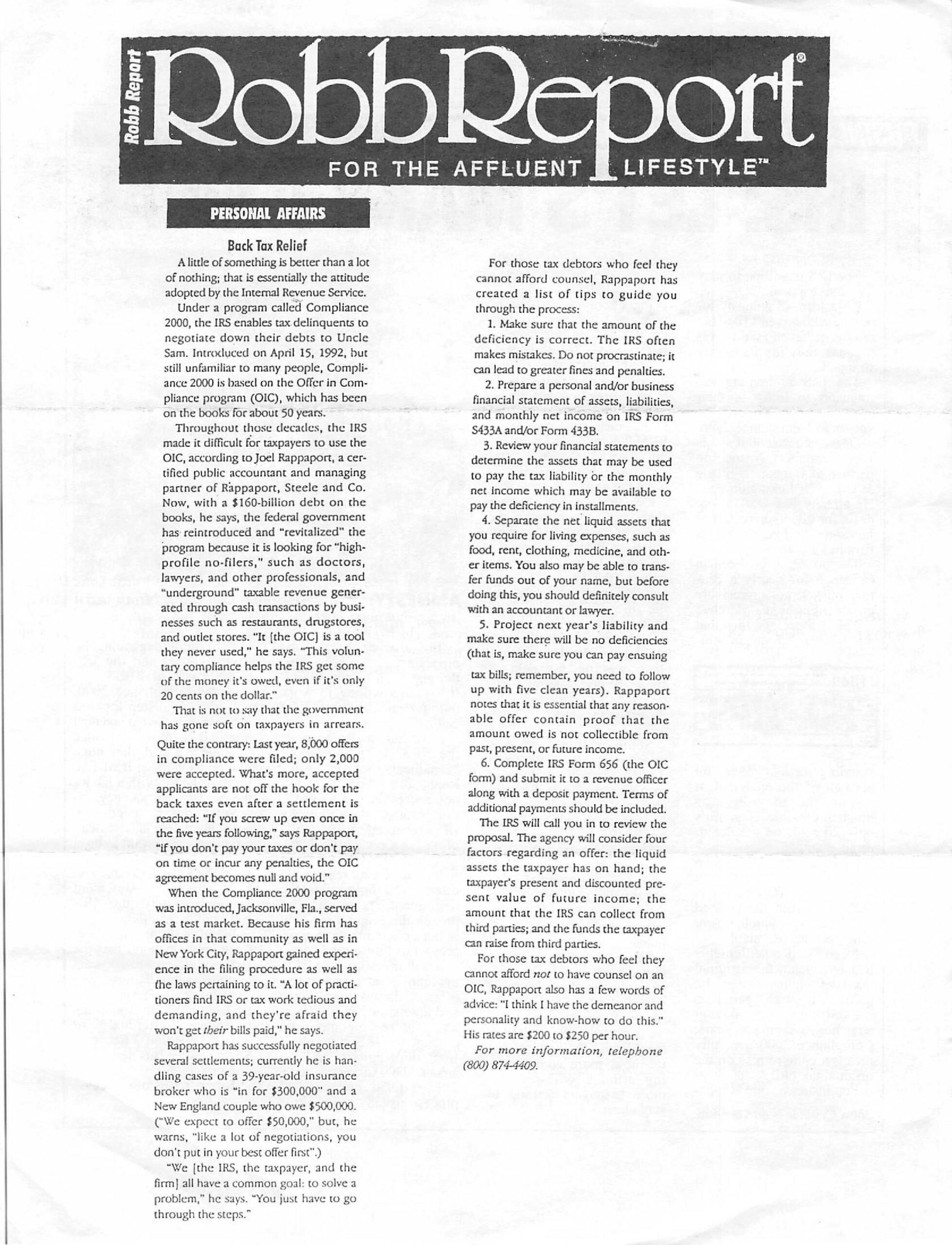
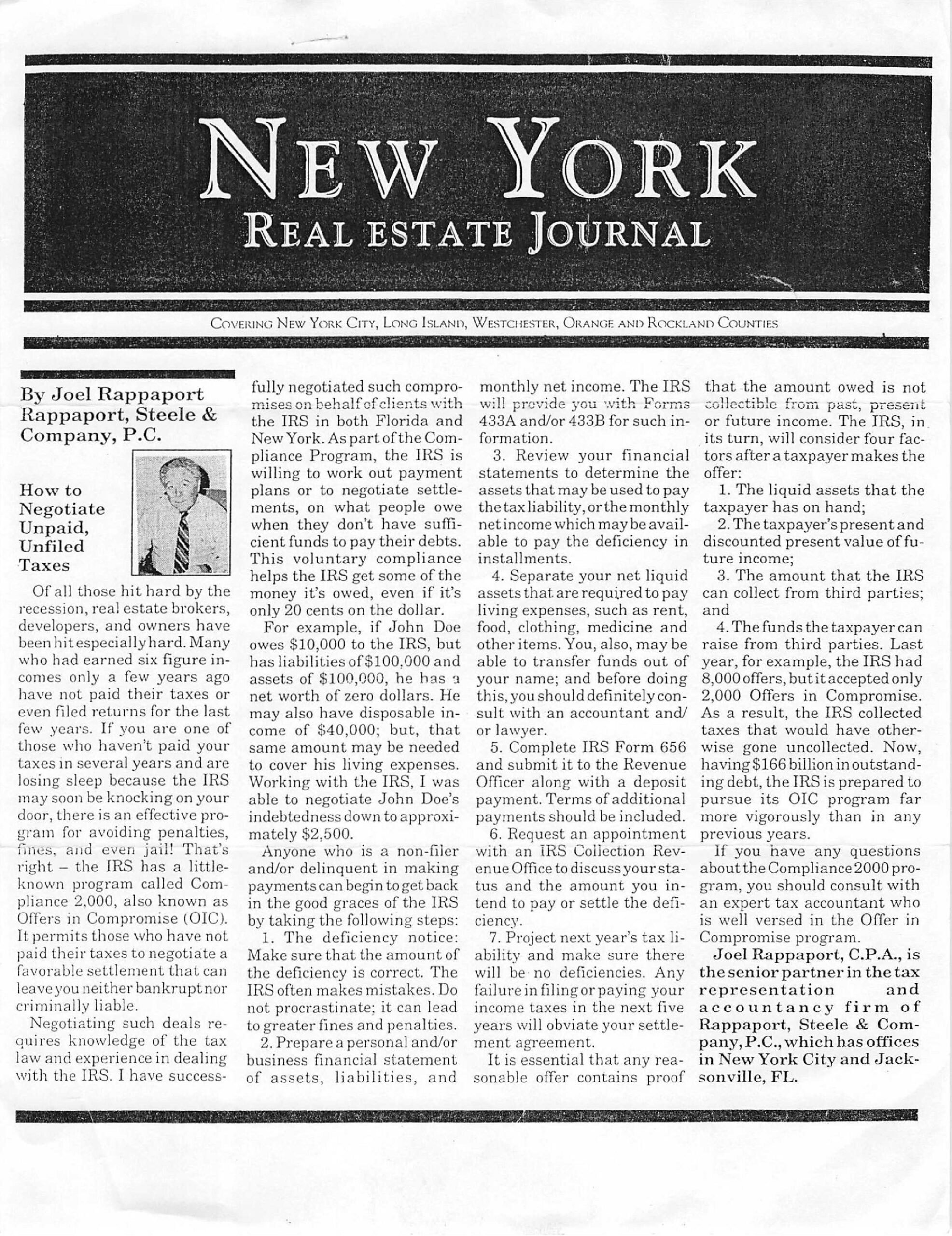
David Rappaport, president of Rappaport Tax Relief, has been in the tax biz for over 25 years! And before him, there was Joel Rappaport, owner of Rappaport, Steele & Company. You can find articles about Joel Rappaport and how he helped taxpayers below.
New York Real Estate Journal
New York Post

Robb Report